


KRISHNENDU KUNDU
21 hours ago1 min read
KRISHNENDU KUNDU
21 hours ago1 min read


KRISHNENDU KUNDU
22 hours ago1 min read


KRISHNENDU KUNDU
22 hours ago1 min read


25 Aug 2026
02:19:13 PM
SERVES FOR NATION


Updated: Feb 24
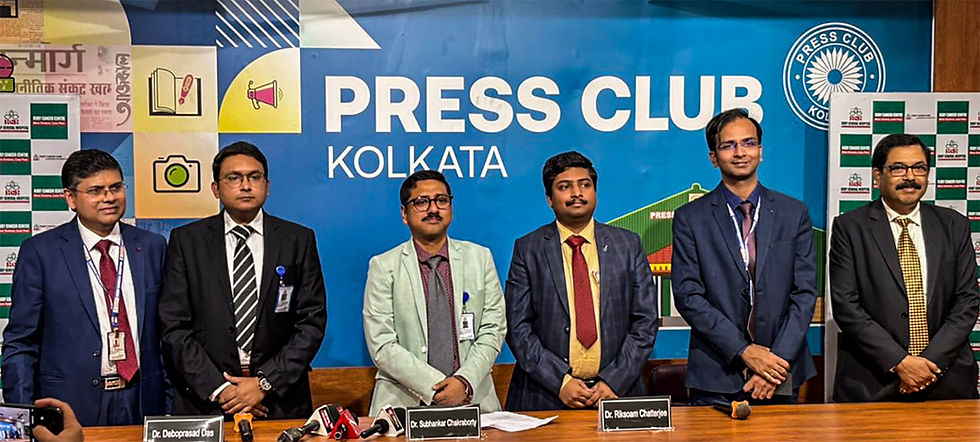
News Desk, News Nation 360 : For a considerable amount of time, Ruby General Hospital's Department of Pulmonology & Respiratory Medicine has been doing Emergency Advanced Interventional Pulmonology treatments. With an emphasis on minimally invasive diagnostic and therapeutic procedures for difficult lung, pleural, and airway illnesses, Advanced Interventional Pulmonology is quickly developing and providing alternatives to standard surgery, typically as outpatient care. Over the past month, the committed Interventional Pulmonology team at Ruby General Hospital, which includes Dr Subhankar Chakraborty, Dr Deboprasad Das, and Dr Riksoam Chatterjee, has performed a few novel and life-saving interventional treatments. These operations, which are incredibly uncommon in Eastern India, have given patients immediate, painless relief from life-threatening conditions. They wanted to talk about these two special interventional techniques that have contributed to great patient outcomes. In the first case, a 62-year-old woman from Jharkhand was brought to the emergency department (OPD) complaining of progressive respiratory distress, a dry cough with streaky haemoptysis, and severe chest pain on the left side for the past three months. She was unable to breathe while she waited in the OPD, so she was rushed to the emergency room for admission. Following a comprehensive clinicoradiological evaluation, a videobronchoscopy showed a large tumour growth completely blocking the left major bronchus, resulting in the left lung collapsing. A rigid bronchoscopy under general anaesthesia was scheduled for the woman after consultation with her family and with written and informed consent. The skilled group of qualified pulmonologists skilfully removed the tumour, reopening the airway. Following the treatment, the patient had immediate alleviation as the left lung expanded totally and the left main bronchus reopened. If the lung had remained compressed for a longer time, this would not have occurred. This technique was made possible by rigid bronchoscopy. A minimally invasive surgical technique for identifying and treating central airway blockages, such as tumours, foreign objects, or strictures, is rigid bronchoscopy. This is mostly utilised for therapeutic procedures, such as airway stent placement, debulking tumours, removing foreign bodies, and treating potentially fatal haemoptysis. In the second case, a 69-year-old Midnapore elderly person with a history of COPD complained of chest pain and dyspnoea. Due to extensive smoking, a low-dose CT thorax was performed, and the results showed a pendunculated intrabronchial growth in the left upper lobe and a spiculated nodule in the right upper lobe. Significant SUV uptake was seen in the subsequent FDG Digital PET-CT scan, which strongly suggested cancer. A sessile pedunculated endobronchial tumour was found to be fully obstructing the anterior segment of the left upper lobe bronchus during a bronchoscopy performed by the Interventional Pulmonology team. A bronchoscopic snare with electrocautery was used to successfully remove the entire tumour in one piece, utilising sophisticated interventional procedures. The airway was fully recanalised after adequate haemostasis was achieved. A radial EBUS (catheter) guided biopsy was performed on a lung lesion in the right upper lobe. The patient had good post-operation stability, tolerated the procedure well, and is now doing well with notable symptom relief. Once more, the EBUS instrument enabled this process. Because of the advances in technology. Interventional pulmonologists, who are highly educated to execute a wide range of operations that change life-threatening conditions into immediate relief for patients, are available around-the-clock as part of Ruby General Hospital's 24-hour respiratory management team. If they have the chance to treat patients at an early stage, they aim to save more lives, give patients immediate relief, and obtain early diagnoses.
Pic - Krishnendu Kundu

