


KRISHNENDU KUNDU
2 days ago1 min read


KRISHNENDU KUNDU
3 days ago1 min read
KRISHNENDU KUNDU
3 days ago1 min read


KRISHNENDU KUNDU
3 days ago1 min read


10 Oct 2026
12:39:54 PM
SERVES FOR NATION


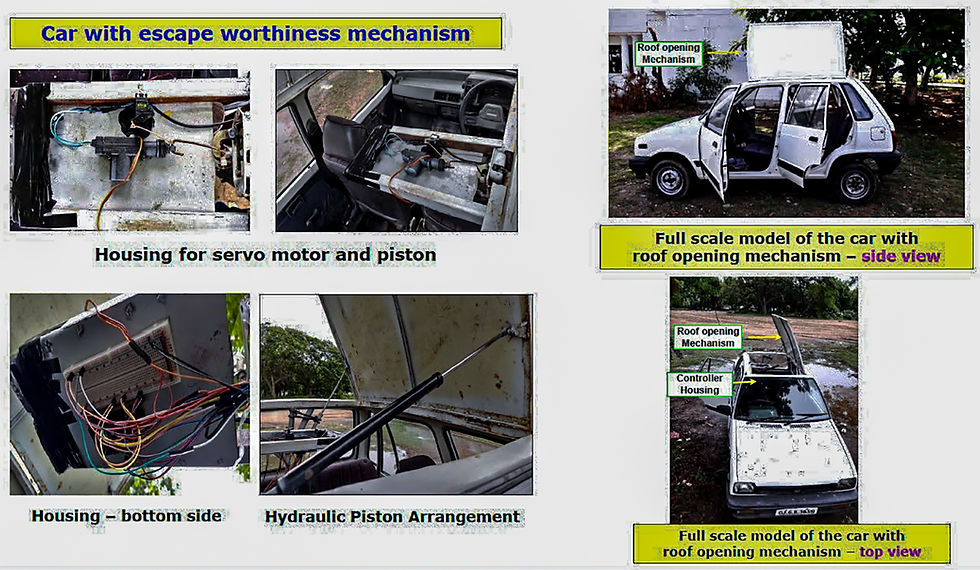
News Desk, News Nation 360: In order to greatly increase passenger survival rates during vehicle submersion and severe flash floods throughout urban India, SSN College of Engineering has developed a ground-breaking automotive safety mechanism called "Improved Escape Worthiness of Car Occupants Under Drowning Environment." Associate Professor Dr. S. Suresh Kumar and student researchers B. Vishal and Neil Ashwin Raj created this mechanism. The cutting-edge solution directly fixes a serious vehicle safety defect in which occupants are left with a dangerously small window to escape during submersion due to the extreme external water pressure that fully prevents traditional car doors from opening. In order to reduce this risk, the SSN team created an automated roof-opening escape system that uses a variety of specialised water sensors in conjunction with a pneumatically operated, non-explosive hybrid mechanism. At an early stage of drowning, the roof of the car can deploy independently of the main electrical system, providing a broad and easily accessible escape route for all occupants, including those trapped in the back seats. This adaptable device serves as a backup rescue hatch in catastrophic collisions where the cabin structure collapses or when a car catches fire due to jammed doors, in addition to flash floods and incidents near bodies of water. This application-driven engineering project represents a significant advancement in passenger safety, having undergone extensive validation through Computational Fluid Dynamics (CFD) simulations and full-scale physical testing on a modified prototype vehicle, where it demonstrated flawless, consistent performance across flat sinking, side tilt, and high-impact nose-diving scenarios. The research team is currently actively investigating automotive industry collaborations to integrate the pneumatic mechanism into commercial vehicle manufacturing for flood-prone regions.
Pic - Courtesy

